Les Héritiers du Sol
We are a non-profit organisation committed to strengthening education in the Democratic Republic of Congo (DRC).
With an abundance of natural resources, the DRC should be a prosperous country, but unfortunately, many children and youth are left behind due to lack of access to quality education.
We believe that education is the key to unlocking the potential of the DRC’s young people and to building a better future for all. Explore our website to learn more about our mission and programmes, and find out how you can get involved and support our work.
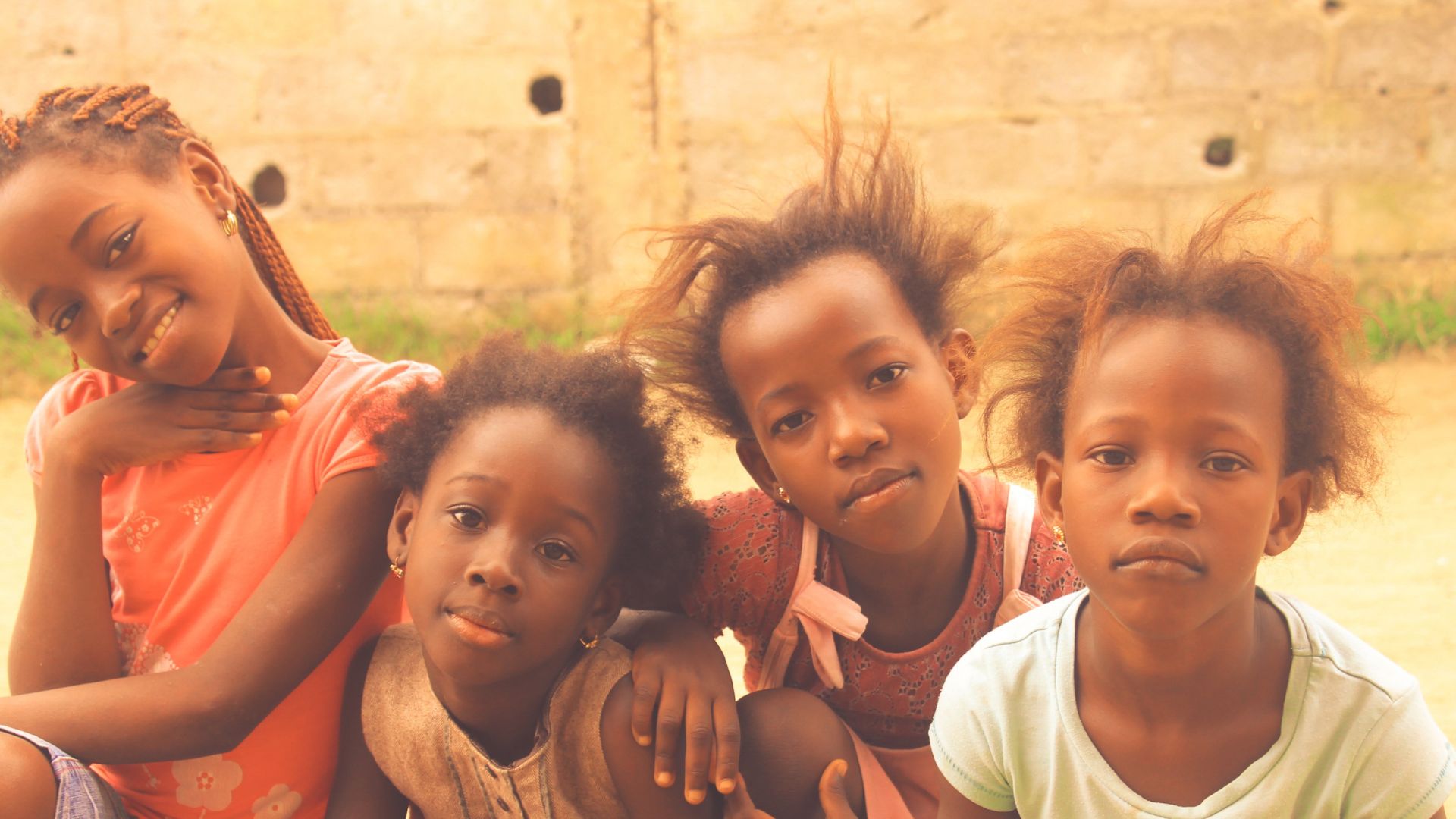
DRC’s population growth rate is around 2.6%. About 40% of the population lives in urban areas. Areas like its capital city, Kinshasa, with an estimated at 14 million people, suffer from a lack of basic amenities that fuel multidimensional poverty. The developmental problems are against the backdrop of rampant corruption that leads to the diversion of funds that could have bolstered education.
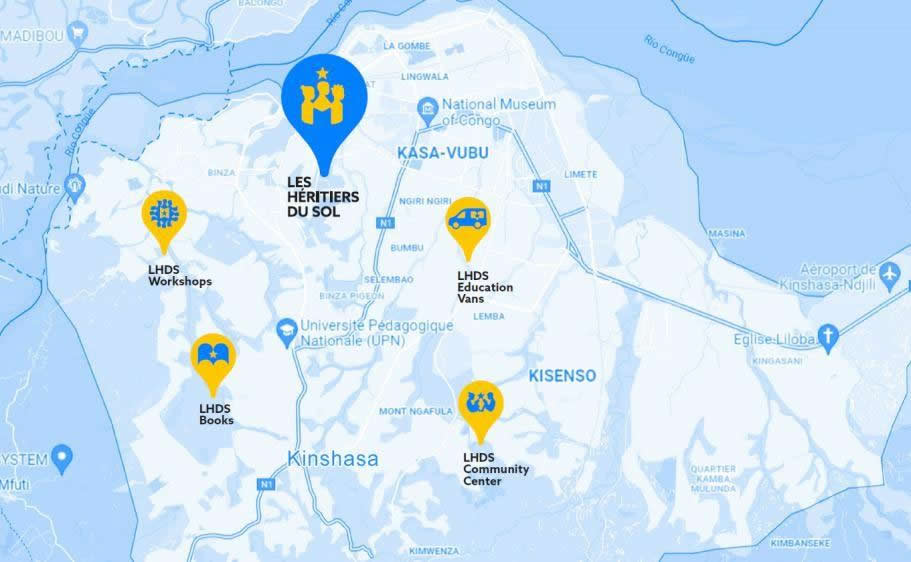
We plan to gradually transform the mobile teaching locations to Community Centres. These centres will be strategically located to execute LHDS’ vision to improve education access with traditional education methods and other learning materials.

Our focus is on infants (1-4years), children(5-14years), youths (15-18years) who have challenged educational backgrounds.
We plan to:
-
Create a crèche environment for early-day education, playtime and infant care, tackling rejection, promoting infants’ well-being at a younger age.
-
Offer mobile education programmes for children.
-
Find and record children who cannot read and write.
-
Test reading and writing levels in youth.
-
Organize workshops for the youth.
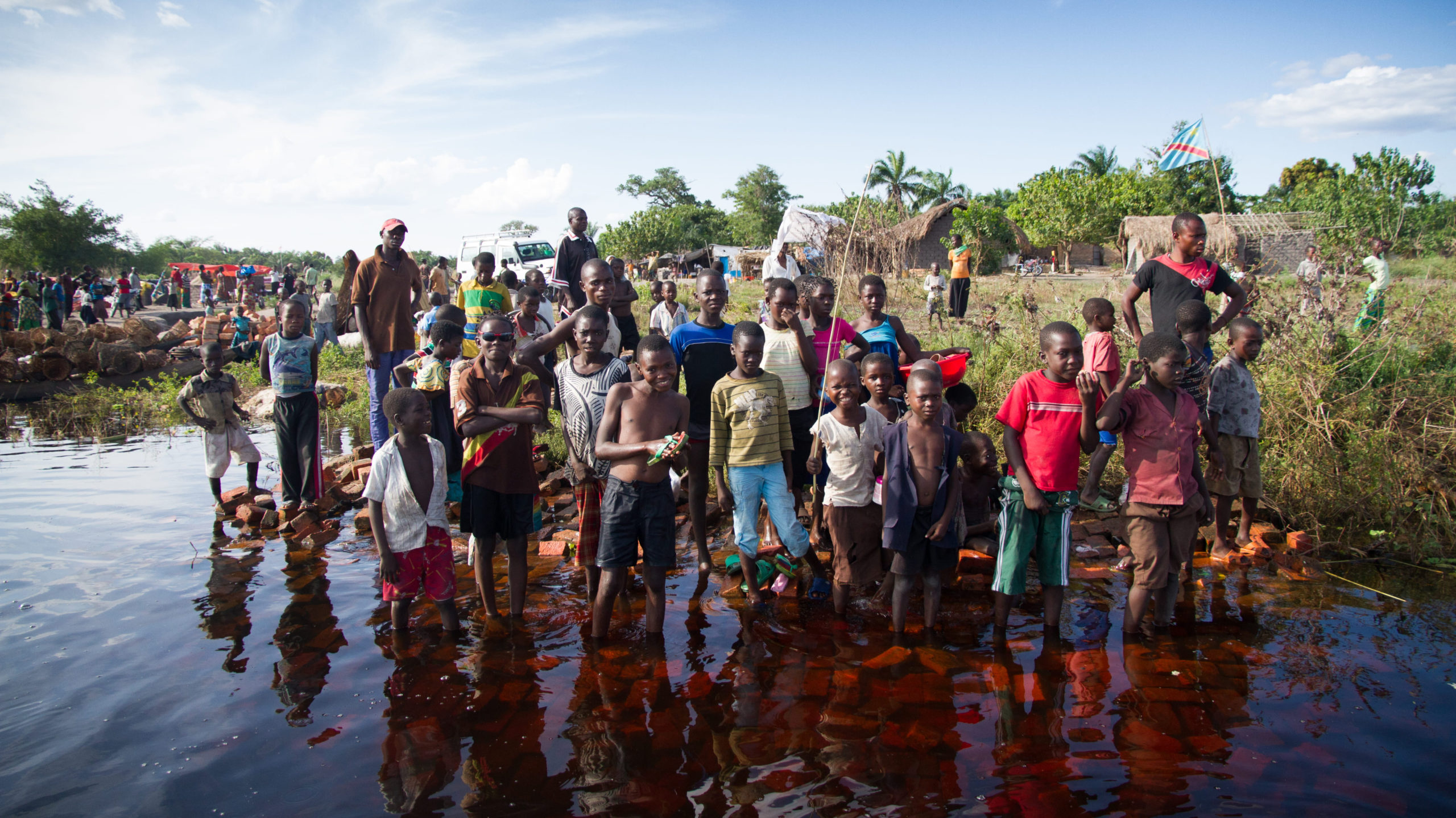
We want to add value to the capacity of our children in the community and their possibility to excel in different areas. We believe these programmes will emphasise the great need to prioritise children who do not have access to education.
Day to day threats and barriers to education will not only be identified, but will be analysed for concrete solutions.
We have no doubt this initiative will gain traction throughout the DRC. We want to infuse a development mindset in our values, culture, and religion.
The introduction of free primary education in 2018 marked a major policy shift intended to guarantee access to education for all children, as mandated by the constitution. However, the reform was implemented without sufficient planning, financing, or infrastructure investment.
As a result, the education system became overstretched. Class sizes doubled, limiting individual support for students. Many teachers lost essential income previously provided through school fees, reducing motivation and weakening educational quality.
Despite the policy, structural barriers persist. Indirect costs, poverty, long travel distances, and social factors continue to exclude vulnerable children. While primary enrolment has improved, completion rates remain low, and transition to secondary education represents a critical point of dropout.
Recent observations in Kinshasa highlight the fragility of the system, with significant dropout rates and unstable school attendance driven by economic pressures and social challenges.
The COVID-19 pandemic exposed these systemic weaknesses, demonstrating the urgent need for resilient, inclusive education models.
Education is a fundamental right. Ensuring access requires not only policy commitments but also practical, inclusive solutions that reach the most vulnerable.
LHDS is committed to working alongside communities, partners, and policymakers to build a stronger, more equitable education system in the DRC.
Core Values
Our core values are:
Respect
We treat every individual with dignity, value their contributions, embrace their differences, and actively support one another in achieving success.
Commitment
We are building and maintaining long-term relationships with partners from other organisations and institutions, strengthening collaboration and shared impact.
Customer Service
We demonstrate genuine passion in understanding our community and responding to their needs, ensuring satisfaction, loyalty, and active engagement in all our initiatives.
Integrity
We uphold the highest standards of ethical behaviour and foster trustworthy interactions with the communities we serve and with our team members.
Excellence and Professionalism
We continuously invest in professional development programmes for our team, enhancing their effectiveness and reinforcing a culture of excellence.
Accountability
We take full responsibility for our actions and decisions, ensuring transparency, responsible resource management, and quality service delivery always.
SWOT Analysis
Having the right business structure is very important to us at LHDS, so we have put in place the right plans to ensure a strong foundation without compromising our aims, mission, and vision.
We are sensitive to the needs of the population we want to serve, and are dedicated to their satisfaction and development.
That is why all the staff we will hire will be in line with our core mission.

Strengths
Organisation’s mission and vision. Human resource and in-house skills. Good coordination and monitoring evaluation mechanisms. Unique teaching strategies.
Weakness
The cities’ infrastructure to reach distant districts . Deciding on priority locations. Culture and mentality . Lack of electricity in most areas.
Unstable and limited finances.
Opportunities:
Information gathering and reporting. Evidence of community response and needs. More equitable distribution of resources and donations. Building sustainable systems with the people and other institutions.
Threats:
Government restrictions and lack of political will.
Insecurity, e.g., threat from gangs and thieves.
Sustainability problems due to lack of funding.
Not getting the recognition for the collected data.